

|
|
|
|---|
Updated Wed, 19-Sep-2012 |
||||||||||||||||
|---|---|---|---|---|---|---|---|---|---|---|---|---|---|---|---|---|
 |
||||||||||||||||
The United Kingdom of Great Britain and Northern IrelandThe United Kingdom
of Great Britain and Northern Ireland, commonly known as the United Kingdom
(UK), or sometimes (incorrectly) Britain, is a sovereign island country
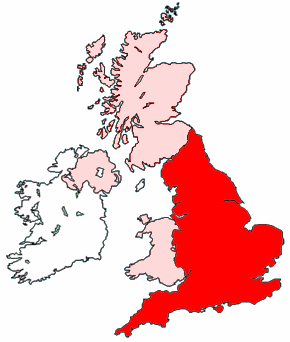
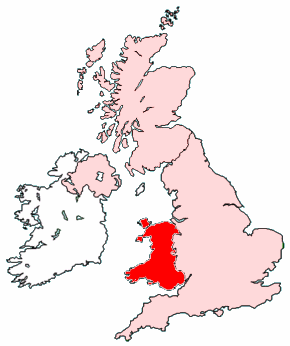
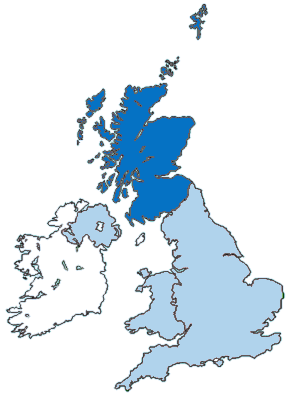
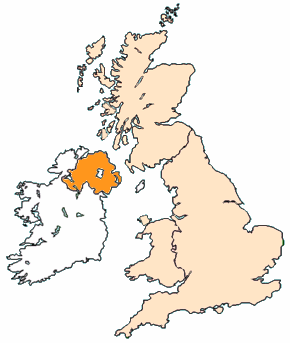
comprising of four constituent countries, namely:
The United Kingdom is a parliamentary democracy and a constitutional monarchy
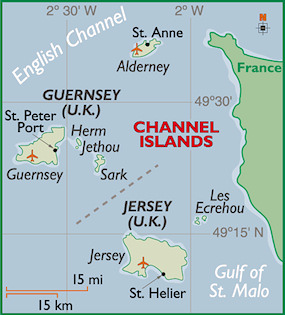
with Queen Elizabeth II as head of state. The Crown Dependencies of the Channel
Islands and the Isle of Man were formally possessions of the Crown, but are not
now part of the UK. Instead, they form a federacy with it. Queen Elizabeth II is
also the head of the Commonwealth of Nations (53 states, see list below) and
head of state of the 15 Commonwealth realms, usually referred to as "The Commonwealth".
HistoryEngland and Scotland had existed as separate sovereign and independent states with their own monarchs and political structures since the 9th century. The once independent Principality of Wales fell under the control of English monarchs from 1284. Under the Acts of Union of 1707, England (including Wales) and Scotland, agreed to a political union in the form of a unified Kingdom of Great Britain. The Act of Union 1800 united the Kingdom of Great Britain with the Kingdom of Ireland, which had been gradually brought under English control between 1541 and 1691, to form the United Kingdom of Great Britain and Ireland in 1801. Independence for the Irish Free State in 1922 followed the partition of the island of Ireland two years previously, with six of the nine counties of the province of Ulster remaining within the UK, which then changed to the current name in 1927 of the United Kingdom of Great Britain and Northern Ireland. The remainder of the island of Ireland is what is now known as the Republic of Ireland - a completely independent republic, with it's own Presidential head of state. The end of the 20th century witnessed a major change to the government of the
United Kingdom with devolution of Scotland and Wales taking effect in 1999. The
creation of the devolved Scottish parliament in particular, with powers to
legislate over a wide range of issues, is beginning to add to differences
between the constituent countries of the United Kingdom. It has brought to the
fore the so-called West Lothian question which is a complaint that devolution
for Scotland and Wales but not England has created a situation where MPs in the
UK Parliament can vote on matters affecting England alone but on those same
matters Scotland and Wales can make their own decisions. Government and politicsThe Parliament of the United Kingdom that meets in the Palace of Westminster, is the ultimate legislative authority in the United Kingdom. Devolved parliaments in Scotland, Wales and Northern Ireland, were established following public approval as expressed in referenda, but according to the doctrine of parliamentary sovereignty, these could be abolished by the UK parliament. Devolved administrationsThe United Kingdom is composed of four
constituent countries: England, Wales, Scotland and Northern Ireland (sometimes
referred to as the home nations in sporting contexts.) The latter three each have
a devolved legislature and their own Executive, led by a First Minister.
The Scottish
Parliament has wide ranging legislative powers over any matter that has
not been specifically reserved to the UK parliament, including education,
healthcare, Scots law and local government.
The National Assembly for Wales has more limited devolved powers than those devolved to Scotland though it may move towards additional powers in the near future. The Northern Ireland Assembly has powers closer to those already devolved to Scotland. However, despite being the largest of the United Kingdom's four constituent countries, England has no devolved executive or legislature and is ruled and legislated for directly by the UK government and parliament. The Crown has sovereignty over the Isle of Man and the Bailiwicks of Jersey and Guernsey. Collectively, these three territories are known as the Crown dependencies, lands owned by the British monarch but not part of the United Kingdom. They are not part of the European Union. However, the Parliament of the United Kingdom has the authority to legislate for the dependencies, and the British government manages their foreign affairs and defence. The UK has fourteen overseas territories around the world, the last remaining
territories of the British Empire. The overseas territories are not considered
part of the UK, but in most cases, the local populations have British
citizenship and the right of abode in the UK. This has been the case since 2002. Commonwealth of Nations
|